
SEO Strategy
What clutter does to occupied listing photos
Sep
The problem starts before a buyer reads the details
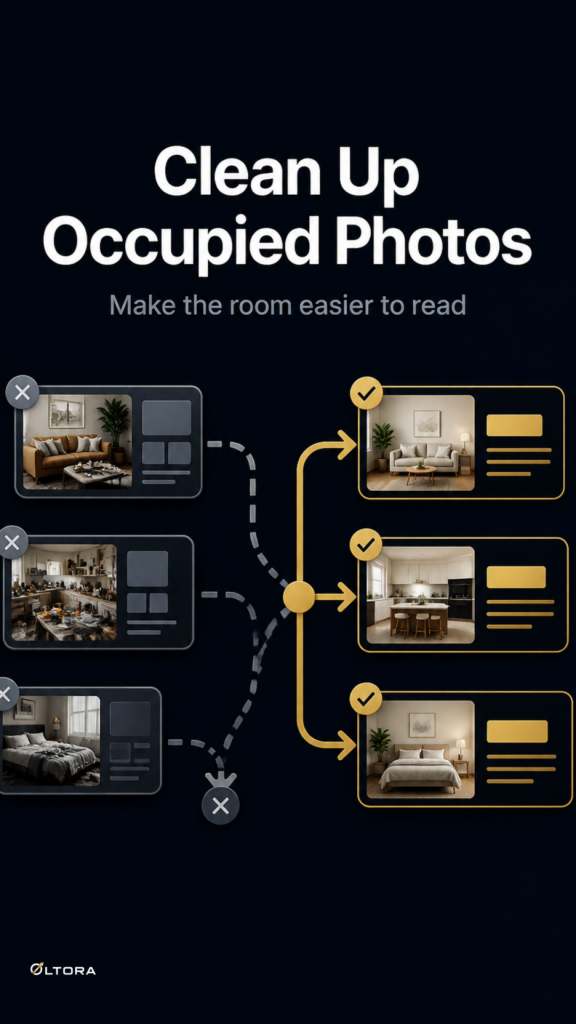
When a property is occupied, the photo often carries more than the room itself. Countertop items, toiletries, cleaning products, bins, personal objects, and small decorations can crowd the frame. The result is usually not dramatic. It is quieter than that: the room looks busier, less open, and less easy to evaluate.
That matters because a listing photo has a short window to do its job. If the eye keeps landing on clutter, the buyer spends less time understanding the space. A kitchen may feel cramped. A bathroom may feel harder to imagine using. A living room may look temporary instead of ready.
This is where Real Estate Photo Enhancement, Decluttering & Virtual Staging fits a practical need. The service is built to clean up occupied property photos while keeping the space recognizable, which is the difference between a tidy image and a misleading one.
What digital decluttering actually changes
Digital decluttering is not a blanket makeover. It focuses on the movable things that distract from the room. According to the service scope, that can include toiletries, countertop clutter, cleaning products, trash bins, small personal items, small movable objects, and other visual distractions.
That kind of cleanup helps a listing in a very specific way. It clears the sightline to the parts buyers need to judge: the layout, the fixtures, the size of the room, and the general condition of the space. When those details are easier to see, the photo feels calmer and more useful.
There is also a practical limit worth respecting. Complex furniture removal, difficult object reconstruction, or major room cleanup may require additional pricing. In other words, decluttering is meant to simplify what is already there, not rewrite the whole room.
Why clutter changes the way buyers read a room
Most people do not inspect a listing photo like a designer. They scan it. That scan is fast, and clutter interferes with it.
- In a kitchen, scattered items can make the counters feel smaller than they are.
- In a bathroom, visible personal products can make the room feel less polished.
- In a bedroom, extra objects can distract from the bed size and the available floor area.
- In a living room, loose belongings can make the space look temporarily lived-in instead of easy to picture as part of the listing.
The consequence is subtle but real: the room asks the viewer to work harder. A buyer may not reject the property because of one cluttered image, but the photo can still reduce confidence and slow the emotional response that helps a listing move forward.
Decluttering is not the same as virtual staging
Occupied property photos raise a common question: should the image be cleaned up, or should it be restyled? Those are different decisions.
Decluttering removes distractions. Virtual staging adds furniture and decor to empty or under-furnished rooms. Furniture replacement sits somewhere in between, helping when existing furniture is visually distracting, outdated, or mismatched.
For an occupied listing, the first job is often cleanup. If the room already has enough furniture and the problem is visual noise, removing clutter may be enough. If the room is under-furnished or awkwardly presented after cleanup, virtual staging can help the buyer understand scale and use. The point is to choose the smallest edit that solves the actual problem.
Keep the property recognizable
The best cleanup work does not erase the property’s identity. Permanent features such as walls, windows, doors, room layout, built-in fixtures, and other architectural elements are meant to stay recognizable unless the request is specifically for a conceptual visualization.
That distinction matters because over-editing can be just as unhelpful as clutter. If the room stops looking like the room a buyer will visit, the image loses trust. The stronger approach is property-first editing: remove distractions, correct the presentation, and leave the structure intact.
That same logic applies when a room needs more than decluttering. If you are considering changes like paint, flooring, or structural visualization, those are not the same as standard cleanup. They belong to a different kind of request and should be discussed separately before ordering.
What to send when the photo needs cleanup
The workflow is straightforward, but the quality of the source image still matters. After ordering, you receive an email from support@oltora.com. Reply to that email with your original high-resolution property photos and clear instructions for each image.
For the best result, send:
- Original high-resolution JPG, JPEG, or PNG files
- The largest available version of each photo
- Specific notes about what should be removed or left unchanged
- Multiple angles when consistency matters across a room
If you want the cleanup to stay consistent from one image to the next, say so. That is useful when several photos show the same kitchen, living room, or bedroom from different viewpoints.
Why image quality affects the final cleanup
Decluttering works best when the original photo gives enough detail to edit cleanly. Heavily compressed social media images and screenshots make the job harder because the source information is limited. A higher-quality original gives the editor more room to remove distractions without creating rough edges or unnatural transitions.
This is one reason the service asks for the largest available file. The cleaner the starting point, the easier it is to produce a result that still feels believable.
When cleanup is the right fix, and when it is not
Use decluttering when the room is usable but visually noisy. That includes occupied homes, rental properties, vacation listings, and other spaces where everyday objects are getting in the way of a clear presentation.
Use another approach when the room needs a different kind of support:
- If the room is empty, virtual staging may explain scale better than cleanup alone.
- If the furniture is the main distraction, furniture replacement may be the better edit.
- If the image needs broader visual improvement, photo enhancement can help with lighting, color, and overall presentation.
The practical test is simple. Ask what the buyer is struggling to see. If the answer is the room itself, decluttering is the right place to start.
For property professionals, that choice can make a quiet but visible difference. The listing stops asking buyers to look past the mess and starts letting the space speak for itself.