
SEO Strategy
Buy Together vs heavier bundle tools in WooCommerce
Sep
The problem: related products are easy to suggest, harder to finish
Most WooCommerce stores do not struggle to find related products. They struggle to make the offer feel complete. A shopper sees the first item, understands the pair or set, and still has to click through several steps to assemble the cart. That is where interest starts to leak away.
Oltora Buy Together for WooCommerce is built for that moment. It lets you combine 2 to 5 simple products into one offer, show the original value beside the discounted total, and give the shopper one clear Add All to Cart action. The cart and checkout stay native to WooCommerce, so the offer lives on the product page instead of becoming a separate purchasing system.
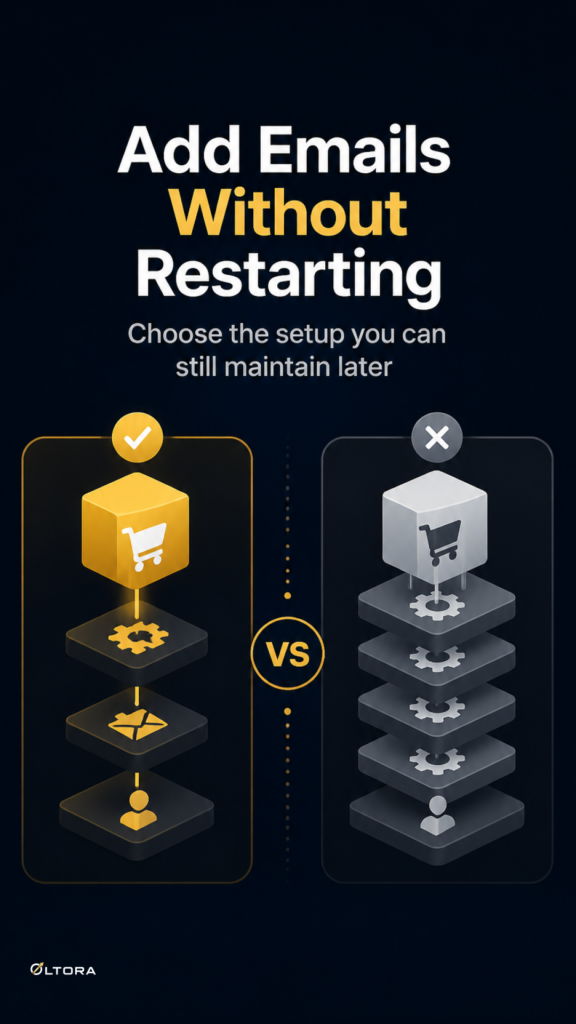
The commercial question is not whether bundle tools exist. It is which ownership model fits the store you plan to maintain. A lightweight Buy Together section can be enough when you want a visual, easy-to-scan offer. A broader bundle plugin can make sense when you need more configurability, but that usually comes with more maintenance and more decisions to manage later.
What a simple Buy Together offer does well
The value of a focused Buy Together layout is clarity. The shopper does not have to guess which products belong together or whether the discount applies to the full set. The offer shows the set, the savings, and the action in one place.
That matters most when the products already belong together naturally. Think of a pair of complementary items, or a small set of simple products that usually travel as a group. If the page asks the shopper to add each product separately, the offer feels like extra work. If the page assembles the set for them, the decision feels easier.
Because Oltora Buy Together is limited to simple products, including simple virtual and downloadable products, the setup stays focused. It is not trying to become a complex kit builder. For stores that prefer a narrower tool with a smaller maintenance footprint, that can be the point.
When a broader bundle tool becomes the expensive choice
WooCommerce’s own bundle ecosystem shows the difference in maintenance horizon. In its official documentation, WooCommerce Product Bundles is positioned for grouping products into fixed kits and discounted sets, while Composite Products is described as a more flexible product builder for configurable kits. Those tools can be the right fit when the store needs deeper control, but they also ask the merchant to maintain a larger rule set.
That extra control is the tradeoff. A bundled tool can solve more scenarios, but it also asks more of the store owner every time the product mix changes. A focused Buy Together offer keeps the decision simpler: which products belong together, what discount applies, and how the shopper adds the complete set.
From a cost-model perspective, the maintenance burden matters as much as the feature list. The more configuration a tool supports, the more often the store team has to remember how it is set up, where a product belongs, and whether a change elsewhere affects the offer. If your aim is simply to let customers add a small set in one step, a lighter system can be easier to live with.
How the cart flow changes the decision
A good Buy Together offer should not force the store to abandon its existing checkout flow. Oltora Buy Together keeps the normal WooCommerce cart and checkout process in place. That makes it easier to add the offer without redesigning the rest of the store.
By contrast, more elaborate bundle systems are often chosen because they can model a wider range of product logic. That can be useful, but it is not always necessary. If the bundle must only apply when the cart contains a complete set of configured products, the simpler question is whether the tool handles that cleanly without becoming overbuilt for the job.
For many stores, this is the deciding line:
- If the offer is a small, fixed set of 2 to 5 simple products, Buy Together keeps the page readable.
- If the store needs configuration steps, more product types, or broader kit logic, a heavier bundle system may be justified.
- If the priority is maintenance after launch, the lighter tool often wins because it is easier to revisit and explain to the team later.
Percentage and fixed discounts serve different maintenance habits
Oltora Buy Together supports both percentage and fixed discounts. That gives merchants two practical ways to present the offer. A percentage discount is often easier to read at a glance. A fixed discount can be useful when you want the complete set to land on a specific price point.
The important part is not the math alone. It is how the discount reads in the offer. If the shopper can instantly see the original value and the discounted total, the page does some of the selling for you. If the pricing message becomes hard to follow, the offer loses its main advantage.
This is another place where a smaller tool can be easier to own. You are not managing a large bundle builder with many conditional paths. You are managing a single offer pattern that can be repeated across product pages as long as the products stay simple and the set remains complete.
When the lighter option is the smarter commercial fit
If your store team prefers a lightweight promotion tool over a complex kit builder, the question becomes whether the product page only needs a clear “buy these together” prompt. In that case, the focused format is often enough.
It is especially sensible when:
- the set is small and fixed;
- the related products already belong together in the buyer’s mind;
- you want the original value and discounted total visible immediately;
- you do not want to replace the native WooCommerce checkout flow;
- you would rather maintain one clear offer pattern than a larger bundle architecture.
That is the lane where Oltora Buy Together for WooCommerce earns its place. It is not trying to outgrow WooCommerce’s broader bundle tools. It is trying to make one small, useful decision easier for the shopper and easier to maintain for the store owner.
How to think about the choice after launch
The maintenance horizon is the part most store owners underestimate. A bundle tool that looks powerful on launch day can become a recurring source of admin work if the product structure shifts often. A lean Buy Together offer can be easier to keep current because it asks less of your catalog and less of your team.
So the practical decision is not “Which tool has the most features?” It is “Which tool will still feel sensible six months after launch?” If your answer is a simple product-page offer that adds related items in one step, the narrower path is usually the better investment.
If you need broader configurability, the heavier tools in WooCommerce’s ecosystem are worth comparing. If you need a clear, compact offer that helps shoppers add the whole set without friction, a focused Buy Together layout is the cleaner fit.