
SEO & Link Building
Why creators need outside signals before they need more promotion
Sep
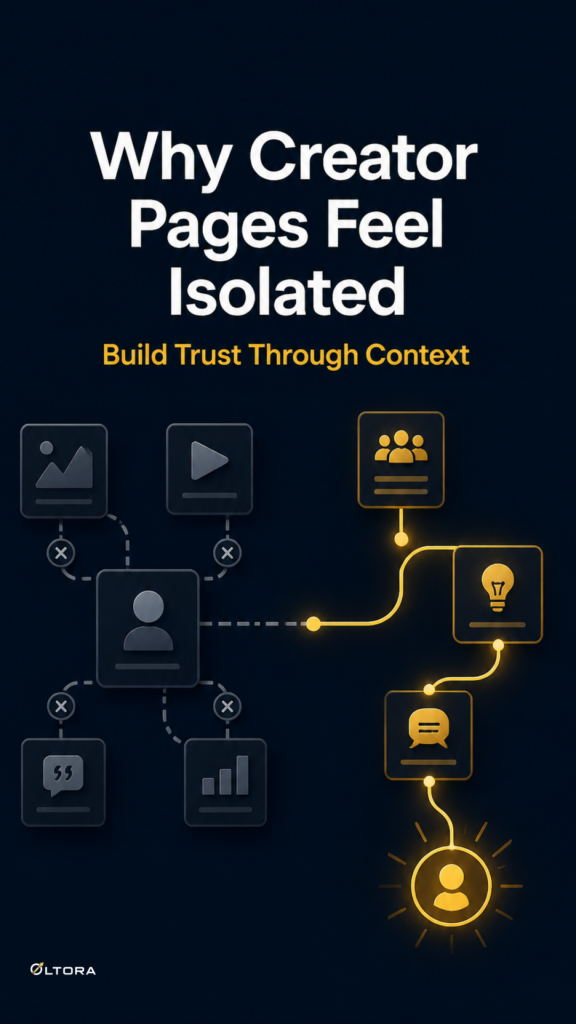
When a creator page looks active but still feels isolated
A YouTube channel can have uploads. A Spotify artist profile can have releases. The page may look complete enough on its own, yet still feel strangely easy to overlook. That is usually not a content problem first. It is an outside-signal problem.
If nothing relevant on the wider web points back to the official creator page, the profile can appear to exist in a vacuum. People can still find it, but they have less reason to trust it quickly. Search systems face the same issue: without context from other sites, a page can be harder to interpret as a real destination rather than a one-off URL.
That is the gap Creator Growth — YouTube & Spotify Visibility Backlinks is designed to address. It focuses on relevance-based placements for official creator links, so the page is supported by external references instead of being left to stand alone.
Why activity inside the platform is not the whole picture
For creators, platform activity often gets mistaken for visibility. A channel may have steady uploads. A profile may list songs clearly. Those things matter, but they do not answer every question a new listener, collaborator, or search engine asks.
The practical problem is simple: if the page is the only place that talks about the page, it carries too much weight by itself. Outside mentions help spread that load. They create a broader context around the official link, which can make the page easier to understand and easier to treat as established.
This matters most when the creator is trying to support one clear destination, such as a channel homepage or an artist profile. If the goal is to make that destination easier to recognize, the surrounding web needs to do some work too.
What goes wrong when outside signals are missing
Creators often try to solve low visibility by adding more on-page content. Sometimes that helps. But if the wider web still has little to say about the creator, the page can remain isolated no matter how polished it looks.
Three failure modes show up often:
- The page is clear to the creator but not to first-time visitors.
- The page has activity, but almost no relevant references from other sites.
- The page gets shared in ways that do not create a stable referral path.
In that situation, more promotion can become repetitive. The same link gets pushed harder, but nothing around it changes. A relevance-based backlink approach is different because it adds external context instead of only repeating the same internal signal.
What relevance changes
Relevance is the part that keeps creator links from feeling random. A backlink on a real, related website does more than deliver a click. It places the creator page in a context that makes sense.
That is why creator-specific outreach is distinct from general SEO link building. General link building can be broad, while creator-focused placements are built around one official music or channel destination. The service source here supports that approach by using manually researched, topically relevant websites and contextual links inside real content.
For an artist trying to support a Spotify profile with external mentions, that difference matters. The useful question is not simply whether a link exists. It is whether the link sits in a setting that makes the profile feel like a legitimate part of a wider topic.
What the service is actually for
Creator Growth is not a generic traffic package and not a shortcut. It is a relevance-based placement service for YouTube channels and Spotify artist profiles. The output is a placement report showing where links were placed and what anchor text was used.
That structure helps creators separate three things that are easy to mix together:
- the official page they want to support
- the outreach work that places the links
- the record of what was completed
Keeping those parts separate makes the result easier to judge. If a creator is trying to build a stronger external footprint, the report matters because it shows the actual placements rather than leaving the work invisible.
How to know whether this kind of support fits
This kind of work fits best when a creator already knows which page should receive the attention. The page should be public, official, and worth pointing people toward directly. If that is still unclear, the first task is usually choosing the page role, not chasing more mentions.
It also fits when the creator wants external signals that feel sustainable. That means real websites, contextual placements, and anchor text variation rather than a pile of similar references that all look the same.
If your concern is that the profile looks active but not established, that is a sign the issue may not be volume alone. It may be that the page needs stronger outside references to stop feeling isolated.
What a smarter first step looks like
Before asking for more promotion, look at the page through an outside lens. Does the official link have enough surrounding context to make sense on its own? Would a first-time visitor understand why the page matters? Are there any credible references pointing to it already?
If the answer is no, creator backlinks can be a practical next move. They help build the credibility layer around the page without changing the page into something it is not. For creators who want support aimed at one clear destination, that can be the difference between a page that simply exists and a page that feels supported from the outside.
And when that support is needed, it is better to build it deliberately than to keep pushing the same link harder and hoping the surrounding signals catch up.