
SEO Strategy
Email sequences should keep moving after the last step
Aug
Email sequences should keep moving after the last step, because the last step is often not the real end of the relationship. A subscriber may finish a welcome series, leave your site for a while, and come back months later with a different level of interest. If the automation stops there, your next useful message has nowhere to go.
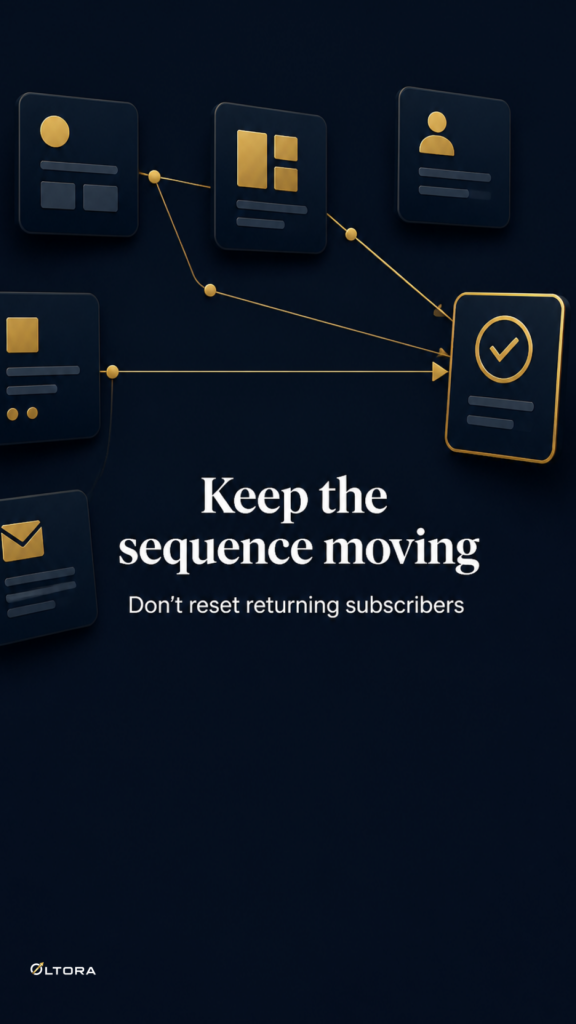
That is the practical problem Newsletter Pipe is designed to solve. Oltora Newsletter Pipe – Self-Hosted WordPress Newsletter & Email Automation Plugin lets you add new emails to an existing sequence and automatically continues the journey for contacts who already reached the old end. You do not need to restart the sequence for everyone just because you improved the content or expanded the path.
For WordPress site owners, that matters most when a newsletter is doing real work: introducing an offer, warming up new subscribers, or guiding readers toward a deeper relationship with the site. A sequence that can grow with the business is easier to maintain than one that has to be rebuilt every time the plan changes.
email sequences should keep moving after the last step
The phrase sounds simple, but the operational benefit is easy to miss. Many email automations are built as if the sequence will never change. In practice, they do change. You may want to add a follow-up message, improve the closing email, or extend a series after learning which topic needs more explanation.
When that happens, a fixed-end sequence creates two messy choices. You can leave older contacts at a dead end, or you can start the whole journey again and risk sending them messages they have already seen. Newsletter Pipe avoids that dead end by allowing the sequence to continue for people who already finished it.
That is especially useful if you publish educational content or product updates on a schedule. A contact who completed the first version of your sequence should not be treated as if they are brand new just because the automation was updated. The system should respect where they already are.
Build for the subscriber path you actually need
Good email automation is less about piling on more messages and more about matching the message path to the reader’s state. A welcome sequence, for example, may need to do a different job from a re-engagement series or a post-signup education path. If you know the next useful step, you can extend the sequence instead of forcing another isolated campaign.
That makes a self-hosted setup appealing for site owners who want the email path to live inside their own WordPress environment. It keeps the sequence tied to the site that owns the audience and lets you work on the automation without treating every change like a new launch.
Useful planning questions usually sound plain:
- What should a subscriber see after the current final email?
- Does this sequence need to stay open for future additions?
- Will returning contacts need a continued path rather than a reset?
If the answer to those questions is yes, then the sequence needs more than a static finish line.
When a growing sequence prevents confusion
A sequence that keeps moving is easier to manage when the content itself changes over time. Imagine you publish a short introductory series and later decide the final email should send readers to a more specific next step. Without a continued automation path, that update can leave older subscribers in limbo. With the right structure, the journey simply extends.
This is also helpful when you want consistency across different subscriber cohorts. Someone who joined last week and someone who joined six months ago may both need to pass through the same core educational path, but not from the beginning in the same way. A sequence that continues after the old end gives you more control over that distinction.
It also reduces the temptation to manage everything through scattered one-off emails. Those can be useful, but they rarely replace a sequence that already knows where the subscriber stands. If the automation is the backbone of your reader journey, it should be able to grow without breaking the earlier route.
Newsletter Pipe in a practical WordPress workflow
Newsletter Pipe fits naturally into a WordPress workflow where you want control over the sequence without rebuilding it every time your content plan shifts. Because it is self-hosted, it belongs alongside the site content and the email journey rather than outside both. That makes it a sensible option for site owners who want a persistent automated path and the freedom to add new emails later.
The main value here is continuity. If your sequence reaches an old end and then becomes useful again with an added email, the contacts who already passed that point are not forced back to the start. That is the kind of detail that keeps automation from becoming clumsy as your newsletter grows.
If your current setup feels like a closed loop, the question is not how many more emails you can squeeze in. It is whether the sequence can keep working after you improve it. For many WordPress publishers, that is the difference between a short campaign and a system that can actually support an audience over time.
When you are ready to make that path easier to maintain, Oltora Newsletter Pipe – Self-Hosted WordPress Newsletter & Email Automation Plugin gives you a way to extend the journey without restarting it.