
Custom Development
Headless vs Monolithic Architecture Maintenance Costs: Choosing the Right Stack During a Replatform
Oct
Migrating an established web application or platform is rarely just a matter of swapping out visual templates. When engineering teams evaluate whether to move toward a decoupled headless setup or stick with a traditional monolithic core, the immediate design excitement often overshadows the long-term maintenance burden. Choosing the right technical approach determines how your team handles hosting overhead, API versioning, content previews, and upgrade cycles for years after launch.
Before committing your infrastructure to a major platform migration, understanding how recurring expenses accumulate across each model prevents unexpected operational friction. This guide maps out the hidden maintenance tradeoffs between monolithic systems and decoupled architectures to help you plan your next technical phase.
The Monolithic Maintenance Model: Simplicity Versus Scaling Limits
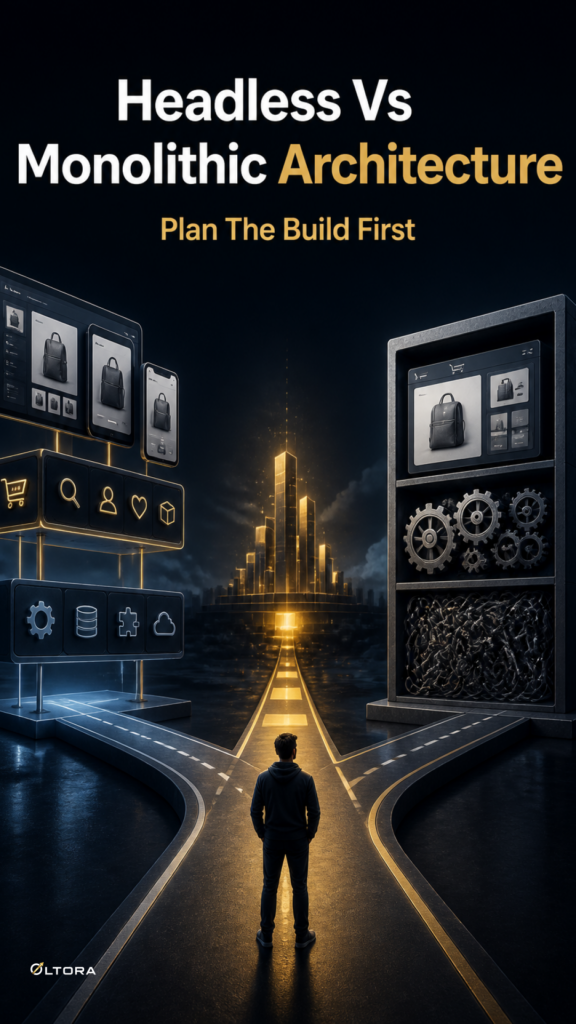
A monolithic web application binds your backend logic, database operations, and frontend presentation layer into a single unified codebase. For many growing organizations, this consolidation offers a straightforward maintenance advantage. Core updates, database migrations, and security patches flow through a single deployment pipeline.
However, this structural unity brings specific compromises. As your catalog or user base expands, minor interface updates can require full-stack deployments, and scaling traffic spikes means provisioning more power for the entire application rather than isolating resource-heavy services. Reviewing your platform through a Custom Development Consultation can help determine whether your current system parameters justify a monolithic upgrade or if your workflows are outgrowing single-server limits.
The Headless Architecture Model: Flexibility and Fragmented Overhead
Decoupled or headless architectures separate the backend content repository or data engine from the frontend presentation framework, communicating entirely via APIs and webhooks. This approach gives developers complete freedom to build lightning-fast web apps, mobile interfaces, or multi-channel distribution channels without being bound by a single templating engine.
The trade-off surfaces immediately in recurring maintenance overhead. Instead of managing one unified environment, your team now maintains multiple moving parts:
- Frontend Hosting and Deployment: Separate hosting environments for frontend frameworks require continuous integration pipelines, independent SSL certificate management, and cache invalidation scripts.
- API Schema Syncing: Backend updates must maintain backward compatibility with external frontend applications to prevent broken interface rendering.
- Preview and Authoring Workflows: Content editors often require dedicated preview environments or custom routing logic to view draft changes outside the decoupled frontend.
Comparing Architectural TCO During a Migration
When migrating an existing digital asset, comparing the cost model requires looking beyond initial build hours. Monolithic platforms typically concentrate expenses into simpler hosting tiers and unified update routines. Headless setups distribute costs across multiple SaaS subscriptions, API gateways, and specialized developer hours required to orchestrate the decoupled layers.
When evaluating alternatives like the AWS Well-Architected Tool for reviewing workload best practices, operators often discover that self-serve diagnostic tools have no additional tool charge beyond underlying resource costs, yet they still demand significant internal engineering effort to interpret and implement the resulting recommendations. A structured scoping session provides a clearer financial baseline by mapping exact project requirements, technical dependencies, and milestone timelines before code execution begins. Source
Making the Final Decision
Selecting between a monolithic stack and a headless setup depends entirely on your team’s operational capacity and long-term product roadmap. If your workflows rely on straightforward content delivery and centralized maintenance, a monolithic approach preserves engineering bandwidth. If your product requires multi-channel distribution, specialized frontend frameworks, and distributed scaling, the recurring operational overhead of headless architecture becomes a necessary investment.