
SEO Strategy
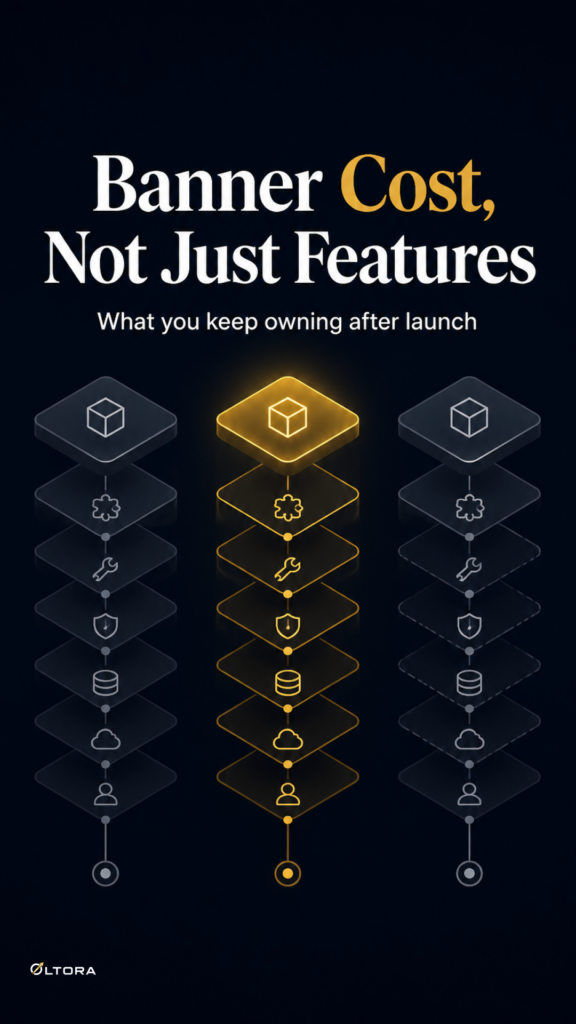
Choosing a Cookie Banner by Ownership Cost, Not Just Features
Sep
When the banner is the easy part
Most site owners do not start with a cookie banner because they want another tool to manage. They start because a WordPress site needs consent handling, and they want the page to stay fast. That is where the real decision begins. The question is not only whether the banner works. It is whether the banner becomes a small local utility or the front end of a broader consent stack that keeps asking for more maintenance.
LCP Cookies Lightning is built for the first path. It is a lightweight cookie consent plugin for WordPress that works with WP Consent API and can fit alongside Google Site Kit Consent Mode when Site Kit is installed. The setup is intentionally narrow: no plugin-owned banner framework, no banner images, no jQuery, no remote banner assets. That matters because every extra layer has a cost, even when the feature list looks attractive on paper.
The cost model behind a consent choice
For a performance-focused site, the cost of a consent solution is rarely only the purchase price. The larger cost is what the tool makes you keep paying attention to after launch.
- Self-contained banner: one plugin does one narrow job and communicates consent through WordPress.
- Broader CMP platform: a fuller service may add scanning, logging, policy tools, or account-based management, which can reduce setup work but increase ongoing dependency.
- Separate service layer: some solutions move part of the consent workflow outside the site, which can be useful when a team wants those extra functions, but it also means another account, another renewal cycle, and another place to troubleshoot.
That is the core ownership question. If your only real need is a clear consent interface that other WordPress tools can read, a lighter banner is easier to keep in place. If you need a larger consent-management package, the banner becomes part of a wider operating model rather than a simple site component.
Why performance changes the math
Consent tools are often judged by compliance features first. On a lean WordPress build, the frontend footprint deserves equal weight. A fixed-position banner can collect consent without behaving like a full-screen interruption. That may sound like a small design difference, but it changes how the page feels before the visitor has even started reading.
LCP Cookies Lightning avoids the usual performance traps that make consent tools feel expensive to run:
- no plugin-owned external banner JavaScript
- no plugin-owned external banner CSS
- no images or animation library
- no jQuery dependency
- no remote banner CDN
The practical result is not a promise of a specific score. It is a more predictable starting point for sites where Core Web Vitals matter, especially WooCommerce stores and business sites that already carry plenty of front-end weight.
Fixed-position banner vs full-screen modal
The interface shape is part of the cost model too. A full-screen modal can feel like a bigger system because it often arrives with more visual treatment, more styling, and more logic around display timing. A fixed-position banner is usually easier to own because it stays closer to the job itself: ask, record, move on.
That difference matters when users need to reopen settings later. A consent choice should not feel permanent. LCP Cookies Lightning keeps the main banner compact, then leaves a small Cookie Settings control available after the choice is saved. For an agency standardizing lightweight WordPress installs, that is the kind of detail that keeps the site manageable after launch instead of making every adjustment feel like a mini redesign.
Where broader alternatives make sense
A more feature-rich consent platform can be the right answer when a client needs more than a banner. CookieYes, for example, is positioned as a mainstream WordPress cookie-consent plugin with banner, scanning, blocking, consent logging, and Cookie Policy generation. That is a different operating model from a lightweight banner. It asks for more from the platform, and it gives more back in return.
That tradeoff is not abstract. It is about ownership horizon. If the site needs scanning, record-keeping, or a broader managed workflow, a fuller CMP may be worth the extra layer. If the site only needs consent communication inside WordPress, then the simpler route keeps the stack cleaner.
Related comparison: CookieYes on WordPress.org
How to decide without overbuilding
When you are choosing a cookie banner for a lean WordPress setup, ask three practical questions:
- Do I need only the banner and consent communication, or do I also need scanning, logging, and account-based management?
- Will this tool stay readable through WP Consent API, or will it create a separate consent path?
- Am I paying for a banner, or am I signing up for a larger service relationship?
If your answer stays close to the first option, a lightweight solution is usually the cleaner fit. It keeps the consent layer close to the site, avoids unnecessary moving parts, and gives you a smaller maintenance surface later. That is especially useful when the same WordPress installation also needs to stay quick for content, product browsing, and checkout.
For teams that already know they want a performance-first consent layer, the value is in what gets left out as much as what gets included. LCP Cookies Lightning keeps the decision simple: collect consent clearly, communicate it through WordPress, and avoid turning the banner into a separate platform inside the site.