
Email Marketing
Why abandoned cart reminders need a growing sequence, not a dead end
Sep
When a cart reminder keeps going, the real question is what happens after the last email
A WooCommerce abandoned cart flow can look finished on paper and still be fragile in practice. The first reminder goes out. Maybe a second follows. Then the sequence reaches its end, and the next time you want to improve it, you face a choice that is easy to overlook: do you start over, split the journey into a new path, or keep extending the one that already exists?
That choice matters because abandoned cart recovery is not only about sending a prompt. It is about preserving the link between the checkout event, the contact record, and the reminder sequence as the store changes. If the workflow cannot grow, every new improvement risks creating duplicate paths, confusing history, or a setup that feels impossible to maintain.
Oltora Newsletter Pipe is built for WordPress sites that want email journeys to keep moving. It can use abandoned checkout events to power a recovery journey, and it can stop remaining reminders when the order is completed. More importantly for a growing store, it keeps the journey structure open enough that new emails can be added later without forcing completed contacts back to the start.
You can see the plugin here: Oltora Newsletter Pipe.
Why a short recovery sequence becomes awkward as the store grows
At the beginning, an abandoned-cart sequence is often simple enough to manage manually. The store has one reminder, maybe two, and the messages are easy to keep track of. But once the store starts adding educational follow-up, product guidance, or a later reminder for customers who were nearly ready to buy, the old end of the sequence can become a problem.
There are three common failure modes:
- The existing sequence ends, so new follow-up ideas need a separate workflow.
- Completed contacts are treated like new ones, which can lead to repeated messages.
- The store keeps adding rules around the old flow until nobody is sure what should happen first or last.
None of those problems come from the reminder itself. They come from the structure around it. A recovery sequence should know where it started, what reminders belong in it, and when it should stop. It also needs enough flexibility to evolve when the store’s messaging changes.
What the recovery journey should remember
Newsletter Pipe keeps a history of the email steps tied to each contact’s journey. That matters because an abandoned-cart reminder is rarely a one-off email. It is usually part of a larger sequence that may expand later.
For example, a store might begin with a basic structure like this:
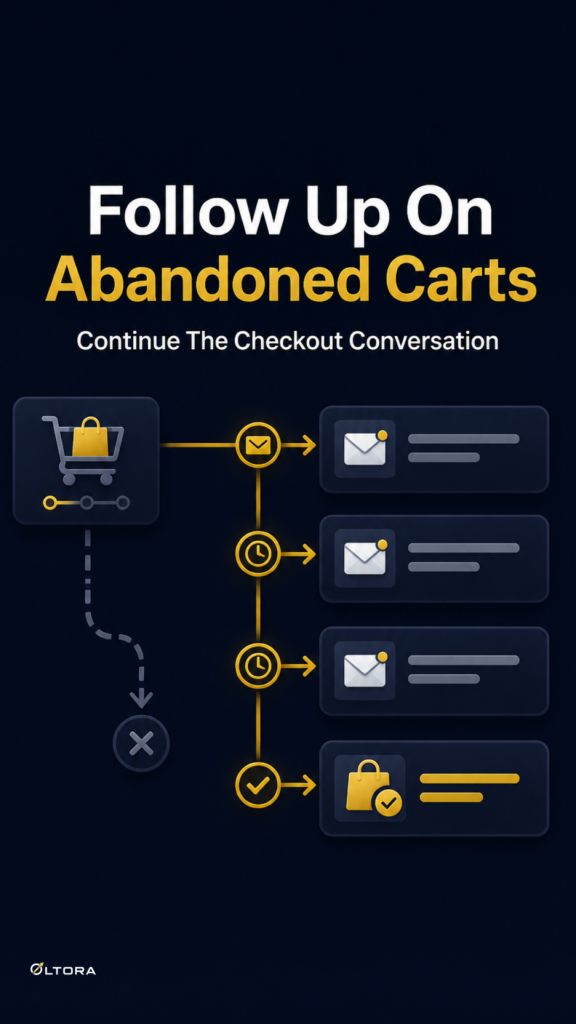
- initial abandoned checkout reminder
- delayed second follow-up
- final reminder
Later, the store may decide that the sequence should include a clearer product explanation or a stronger final nudge. If the contact already reached the old end, the plugin can continue that eligible contact into the newly available step without restarting the sequence from the beginning.
That approach is especially useful when the recovery flow is built to stay tied to the checkout, not to a generic mailing list. The contact history remains part of the journey, so the store is not guessing whether a reminder should be treated as new or already completed.
Where WordPress-based control helps
For stores that already manage products and customers inside WordPress, keeping the email workflow close to the site makes the recovery process easier to reason about. Newsletter Pipe stores core newsletter information in the WordPress environment rather than relying on a separate hosted newsletter database from Oltora. That gives the site owner one working place for contacts, sequences, delivery history, tracking records, and WooCommerce order information.
This matters when the abandoned-cart flow needs to stay connected to a real order path. If the order completes, the remaining reminders associated with that recovery journey can stop automatically. If the sequence grows later, the contacts who already reached the prior end can move forward without manual sorting.
In a practical store workflow, that can be the difference between a recovery system that stays understandable and one that slowly turns into a tangle of exceptions.
The trigger is only useful if the sequence can keep pace
An abandoned checkout event is a strong trigger only when the rest of the workflow is ready for it. Newsletter Pipe can use the abandoned checkout event to power a journey according to your configuration and applicable consent requirements, but the value comes from what happens after that trigger fires.
That is why a growing sequence matters. The original abandoned-cart emails may do their job for a while, but the business rarely stays still. The store may add new products, improve the checkout, or learn that a different follow-up message works better after a few months. If the sequence cannot evolve, each change forces the owner to rebuild instead of refine.
A better approach is to treat the abandoned-cart path as a living journey. Start with the reminders you need now. Extend the sequence when the business needs more context or a better follow-up. Keep the history intact so the system knows who has already received what.
What this setup is good for
Newsletter Pipe is a fit for stores that want abandoned-cart recovery to stay controlled while the email journey continues to grow. It is especially relevant when the same WordPress site also handles newsletter signups, customer follow-up, or product education and the store owner wants those paths to stay organized in one place.
It also suits teams that do not want to restart completed contacts every time they improve the sequence. That is the real operational benefit here. The checkout reminder remains connected to the original event, the sequence remains extendable, and the contact history remains useful instead of being overwritten by the next edit.
If your current abandoned-cart flow ends the moment you most want to improve it, the problem is probably not the email copy. It is the structure. A sequence that can keep moving gives you room to adjust the recovery path without losing the thread that started it.
For more context on the product itself, see Oltora Newsletter Pipe.