
SEO Strategy
How a quiet referral path can strengthen a spiritual shop
Sep
When a good shop still has no trail behind it
A spiritual shop can have thoughtful products, careful wording, and a homepage that explains the offer clearly. Even then, the business may feel oddly easy to overlook if there is little trace of it outside its own site. That is often the real issue before buying any off-site visibility work: not whether the site is polished, but whether there is any meaningful path from the wider web back to it.
That gap matters because many buyers do not move straight from a search result to a purchase. They notice the brand somewhere else, check whether it appears in a relevant context, and then decide whether it feels established enough to trust. For spiritual, ritual, metaphysical, and energy work businesses, those outside signals can carry more weight than another page of product copy.
External Visibility SEO Service for Spiritual & Ritual Shops is built for that situation. The service is not about piling on mentions for their own sake. It is about manually researching relevant websites, brand mention opportunities, and external placement options that can make the shop easier to discover from outside its own pages.
Why a referral path is different from more content
A lot of shop owners assume the next step is to publish more. More articles, more collection pages, more product descriptions. That can help when the site itself is unclear. But if the site already explains what it sells, the deeper problem may be that nothing around it reinforces the brand.
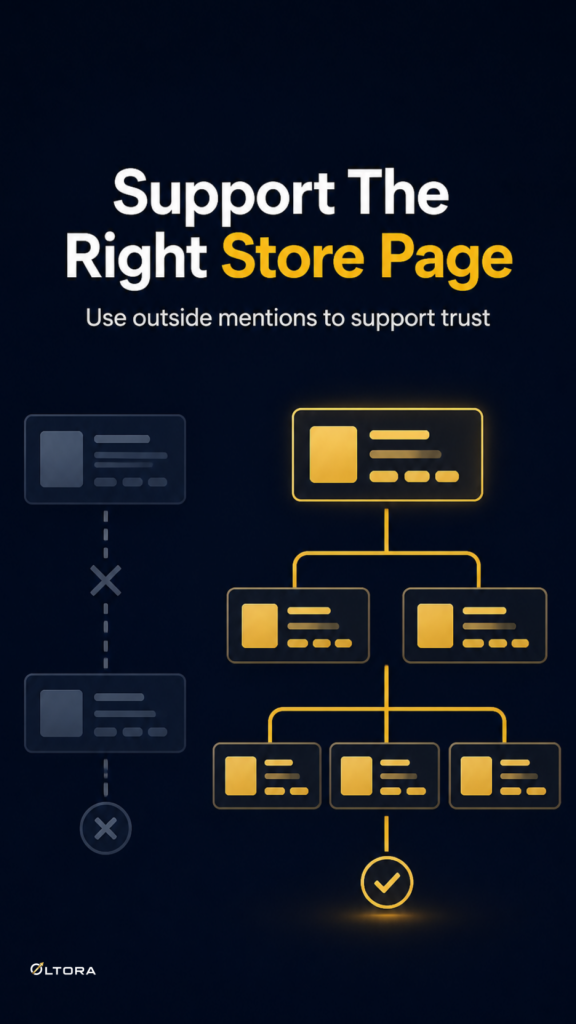
A referral path is the trail a reader can follow from one relevant place to your shop. It is not just a link. It is context. A mention on a related website tells a cautious visitor that the brand belongs in a real conversation, not only on its own storefront. That distinction matters because trust is rarely built on the destination page alone.
Search engines also rely on that surrounding context. A page can be well written and still look isolated if no relevant websites reference it. External mentions help fill in the picture by showing that other sources connect the brand to a topic, a category, or a service area.
What to look for before you ask for outside visibility
If a spiritual shop is considering this kind of work, the first question is not how many placements it can get. It is what kind of signal each placement would send.
- Does the outside site sit in a relevant niche?
- Would the mention make sense to a real reader?
- Is the destination page specific enough to deserve attention?
- Will the placement help someone discover the brand, not just notice a name?
Those questions matter because generic mentions can create motion without momentum. A reference that feels detached from the topic may add little more than clutter. By contrast, a placement that fits naturally can support both referral visibility and brand recognition.
That is why the service begins with manual review of the website, niche, and target pages. The useful target might be the homepage, a service page, a product collection, or a page that explains the business in clearer terms. The right destination depends on what the shop needs the outside web to support.
Why the destination page matters as much as the mention
It is easy to think only about the source of the mention. But the page receiving the traffic has to be ready for it. If the page is vague, crowded, or trying to serve too many purposes, even a relevant referral can lose force.
For a spiritual shop, that usually means choosing one page that can carry the signal cleanly. A homepage may work when the brand story is still the main question. A service page may be better when the goal is to build trust around a specific offering. A product or collection page may make more sense when the business wants to support a focused category.
The service is designed around that kind of page-specific thinking. It can target natural page destinations instead of forcing every placement to point to the same place. That helps keep the external visibility work tied to real business needs rather than a generic campaign shape.
What this approach avoids
For niche businesses, not all visibility tactics are equal. Some approaches chase quantity and create a trail that looks busy but feels thin. The service description here is explicit about what it does not use: automated spam, private link networks, link farms, or mass-submission shortcuts.
That restraint is part of the value. Spiritual and ritual brands often depend on trust before purchase. A messy off-site footprint can work against that. A more careful process keeps the brand aligned with relevant sites and transparent visibility options, including sponsored placements where disclosure is required.
This is also where a manual service can help a shop owner make better decisions. Instead of guessing which sites might work, the research is done around relevance, fit, and the page that should benefit. That keeps the work closer to referral discovery and long-term visibility than to noise.
When the wider web is part of the buying decision
There are moments when a spiritual shop does not need a redesign or another round of on-site writing. It needs a clearer presence outside its own domain. That is especially true when the shop already has meaningful offers, but potential buyers have little to latch onto when they search for the brand elsewhere.
In that situation, a careful external visibility plan can help the site feel more complete. Not by pretending to create authority overnight, and not by stacking random mentions, but by placing the brand where it makes sense and where readers may actually follow the path back.
If your shop already has the offer but lacks the trail, that may be the sign to look beyond the site itself. The right external references can make discovery easier, improve how the brand is understood, and give the most important page a better chance to be found by the right audience.