
SEO Strategy
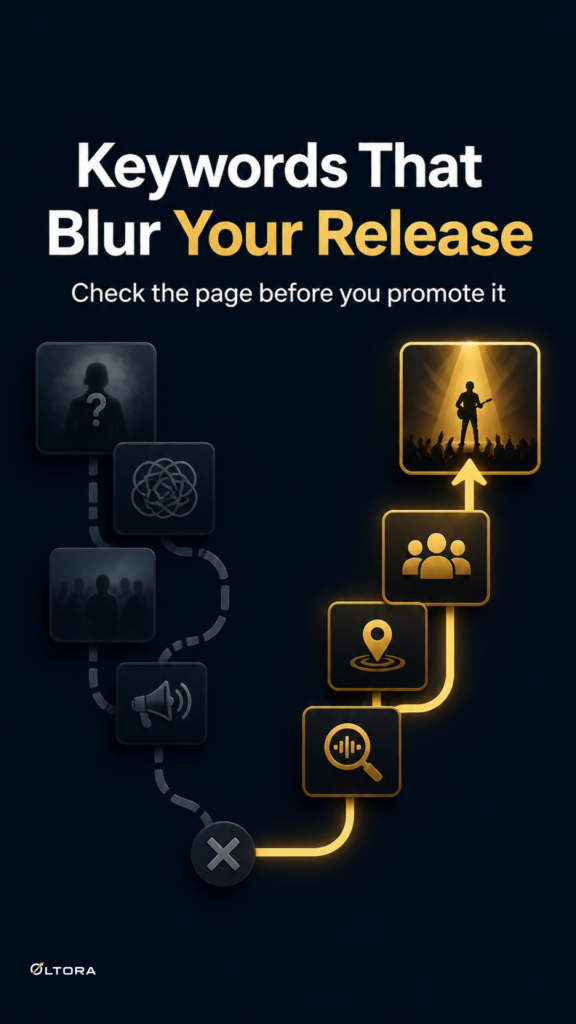
Why your music keywords can fail before release day
Sep
When the keywords are the weak point, the music page feels harder than it should
You can have a finished track, a clean upload, and a shareable link, then still hesitate because the page does not explain itself well. That hesitation often comes from the words around the music, not the music itself. The artist name may be clear enough. The genre may be there. But the keywords can still feel too broad, too narrow, or too crowded to help a first-time visitor understand what they are looking at.
This is the moment when a focused check is more useful than more promotion. Oltora’s Music Visibility Report reviews one public music link and turns what is visible into practical suggestions for title, description, keyword direction, link structure, and external signals. That makes it a useful before-buying step for artists who are about to share a new single or release and want the page to read clearly before it leaves their hands.
What usually goes wrong with music keywords
Most keyword problems are not dramatic. They are small mismatches that make the page fuzzy.
- The artist name is present, but the page does not say enough about the type of release.
- The genre label is too general to help the right listener recognize the page.
- The audience language is so broad that it could belong to almost any release.
- The page mixes identity, style, and intent in a way that makes the main topic harder to spot.
That matters because a music page is doing two jobs at once. It has to represent the release and help strangers understand it quickly. If the keywords are doing too much at once, they stop helping.
A report that focuses on one link can help you see whether the page actually says one clear thing. It is not judging the music. It is checking whether the public page is easy to interpret on first contact.
Choose keywords by role, not by volume
A useful keyword set usually has a job for each part of the page. The artist name identifies the source. The genre or style tells people what kind of music it is. The audience language gives context only when it genuinely narrows the page.
If those pieces blur together, the page can sound like a list instead of a signal. For example, a song page that tries to mention every possible listener may end up less readable than one that keeps the artist name, the release type, and the genre in separate lanes.
That is where a visibility report becomes practical. It can show whether the keywords support the page you already have, or whether the language needs to be simplified before you promote it more widely.
Before you send the link out, decide what the page should do
One of the hardest choices is not which keywords to use, but which purpose should lead. A single music link can be shared in different ways:
- as a release page for one song
- as a video link with title and description text that need to carry more context
- as an artist profile where the bio has to do most of the explaining
Those are related, but they are not the same. A keyword set that fits a song page may be awkward on an artist profile. A profile bio may need broader context than a single release title. Before buying a report, it helps to know which link you actually want people to find first.
That choice shapes the suggestions you will use later. If the wrong link is promoted as the main one, even good keyword advice can be applied to the wrong page.
What the report can help you settle
The value of a Music Visibility Report is that it helps you move from uncertainty to a shorter list of decisions. Based on the public page, you can get:
- a visibility score based on SEO and link visibility factors
- the main issue holding the page back
- keyword ideas related to the artist name, genre, and target audience
- title or description suggestions where the platform allows changes
- a recommendation on which link should be promoted as the main link
- practical actions to improve visibility
For a release that is close to launch, that can be more useful than a broad checklist. You are not trying to rework everything. You are trying to avoid sending traffic to a page that still needs a cleaner explanation.
Why this matters before release day, not after
Once a track is public and being shared, every unclear signal gets repeated. The wrong title keeps circulating. A weak description gets copied into social posts. An imprecise keyword set makes the page harder to understand wherever the link appears.
Checking the page before it is pushed hard gives you a better chance to correct the small things while they are still easy to change. That can mean simplifying the description, tightening the keyword direction, or choosing a different link as the main one for promotion.
For artists who already know the music is ready, the real question is whether the page is ready to support it. If the answer feels uncertain, a one-link report is a sensible next step.
What to review before you order the report
You do not need a long brief. You do need a clear starting point.
- Send the one public music link you want judged.
- Decide whether it is a song, video, or artist profile.
- Think about which audience you actually want to reach.
- Know whether the page needs help with title clarity, description clarity, or keyword direction.
That small amount of preparation helps the report focus on the real problem. If the page is already carrying the wrong signals, the report can show you where the confusion starts and what to adjust first.
For artists promoting a new single or release, that is often the cleanest way to avoid guesswork. You do not need a bigger campaign before the page makes sense. You need the page to make sense before the campaign grows.