
SEO & Link Building
How to read a backlink offer before you send the brief
Sep
When a backlink offer looks fine, but the brief is still too vague
If you run an online store, the hardest part of link building is rarely finding someone who says they can help. The harder part is knowing what to ask for before the work starts. A backlink offer can sound legitimate on the surface and still leave you with a weak brief: one page repeated too often, the same wording every time, and no clear reason why the links would read like real editorial references.
That is the quiet risk for Etsy sellers, Shopify merchants, and WooCommerce store owners who want stronger visibility without leaning on shortcuts. You do not need a huge list of links to start thinking clearly. You need a simple way to judge whether the offer can support a natural profile once outreach begins.
E-Commerce Growth — SEO & Backlink Service for Online Stores is built around relevance-based outreach for online stores, with contextual placements in real content and a placement report that shows what was done. Before you send a brief, the useful question is whether that kind of work fits the page you want supported.
Why the brief matters before any outreach
A lot of store owners start with the wrong level of detail. They ask for “backlinks for the store” when the real need is narrower. Maybe one category page is the best fit. Maybe a product page already matches the way buyers search. Maybe the homepage should stay in the background while the pages with buying intent receive the outside references.
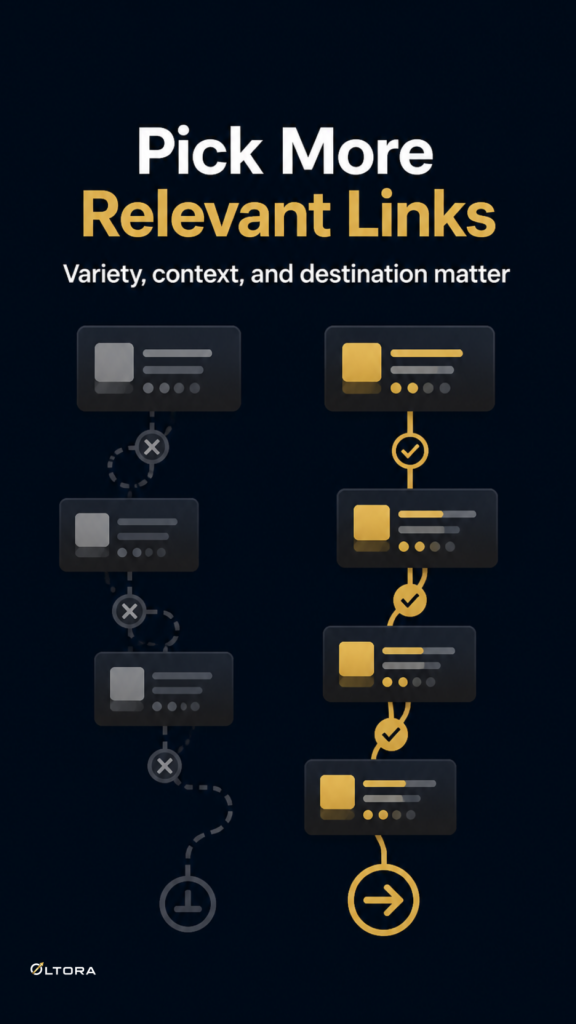
If the brief does not distinguish those choices, the resulting links can become lopsided. That is where anchor text and link-type variation matter. A natural profile does not look manufactured because every mention uses the same phrase, points to the same destination, and appears in the same kind of surrounding copy. It reads better when the wording varies, the destinations make sense together, and the placements feel like genuine references rather than repeated templates.
That does not mean randomness. It means control. For an online store, the brief should leave room for the link builder to place contextual references that fit the source page, while still keeping the destination strategy aligned with the business goal.
What a believable mix looks like in practice
Think about the profile in three parts.
- Anchor text: the clickable wording should not sound copied from one line item to the next.
- Destination: the link should not always push the same page unless that page truly deserves repeated support.
- Placement context: the mention should feel appropriate to the article or page where it appears.
For example, an Etsy seller trying to improve store credibility in search may not need every mention to point at the storefront homepage. A category page with a clear product pattern may be a better destination for some references, while a key listing or collection page may deserve others. A WooCommerce store might use a similar approach for a category page that already matches buyer intent and can benefit from outside support without turning every mention into the same signal.
The point is not to engineer a perfect pattern. The point is to avoid a profile that feels overly tidy. Search engines and readers both respond to references that look earned. A mix of anchor wording and context helps the profile read that way.
Questions worth settling before you buy
You do not need a technical spreadsheet to make a smart decision. You do need a brief that answers a few practical questions.
- Which page is the main destination for outside mentions?
- Are you supporting a homepage, a product page, or a category page?
- Does the site already have enough page clarity for contextual links to make sense?
- Is there room for varied anchor wording without forcing unnatural phrases?
- Will the placements be in real content rather than thin listings or low-value pages?
These questions help you see whether the offer is matching the store’s real structure. They also keep you from asking for links that are “good” in theory but unhelpful in practice. A page that does not have a clear job will not benefit much from repeated outside references, no matter how many there are.
That is why the comparison that matters is not between link count and no link count. It is between a placement report that shows where the links landed and an ongoing managed SEO retainer that keeps expanding the work over time. For some store owners, a clear placement report is enough to review what was actually placed, which domain supported it, and how the anchor text was handled. That makes the decision easier to evaluate without assuming the whole SEO strategy is bundled into one service.
How to keep the request focused
If you are preparing to send a brief, keep it simple and specific. State which store page needs support. Mention the kind of page you want linked from if that matters to you. Ask for variation in anchor text and link type so the result does not look repetitive. And make sure the work is framed as relevance-based outreach to real websites, not as a generic link dump.
That gives the service a usable target. It also helps you judge the result more fairly when the report comes back. The most useful backlink work for an online store is usually the kind that can be explained without a lot of caveats: why this page was chosen, why these placements fit, and how the profile avoids looking mechanically assembled.
If that sounds like the gap you are trying to close, the decision is less about “getting backlinks” and more about asking for the right kind of support from the start.